

AWS Interview Questions and Answers
These AWS Interview Questions cover EC2, S3, Lambda, VPC, IAM, API Gateway, CloudWatch, and DynamoDB. These AWS Interview Questions and Answers are designed for both beginners and experienced professionals
Why should you prepare AWS Interview Questions?
Practicing AWS Interview Questions helps candidates understand core AWS concepts and perform better in technical interviews.
AWS Architecture Overview
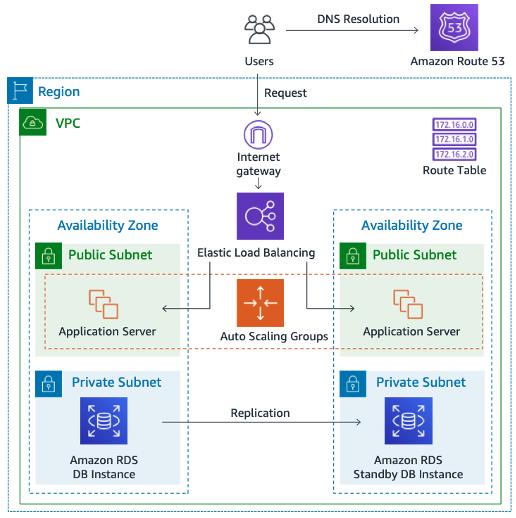
Module 1: AWS Interview Questions – Core Concepts
✅ 1. What is AWS?
Answer:
Amazon Web Services (AWS) is a cloud computing platform provided by Amazon.
It provides:
- servers
- storage
- databases
- networking
- monitoring
- security
- messaging services
using the internet.
Instead of managing physical servers,
companies use AWS cloud infrastructure.
Real-Time Example
Instead of buying servers manually:
- deploy Spring Boot applications on AWS
- scale automatically
- pay only for usage
Key Benefits
✅ No physical server maintenance
✅ Scalable infrastructure
✅ High availability
✅ Global access
✅ Faster deployments
✅ 2. What are the Benefits of AWS?
Answer:
AWS provides:
- scalability
- flexibility
- reliability
- security
- cost optimization
Main Benefits
1️⃣ Scalability
Increase/decrease servers automatically.
Example:
- festival traffic
- sale traffic
- high API load
2️⃣ Pay-As-You-Go
Pay only for resources used.
No huge upfront investment.
3️⃣ High Availability
Applications can run across:
- multiple regions
- multiple availability zones
Improves fault tolerance.
4️⃣ Security
AWS provides:
- IAM
- encryption
- security groups
- monitoring
5️⃣ Faster Deployment
Infrastructure setup becomes quick.
Deploy applications within minutes.
✅ 3. What is EC2?
Answer:
Amazon EC2 (Elastic Compute Cloud) is a virtual server in AWS cloud.
Used to:
- host applications
- deploy microservices
- run backend APIs
How We Use EC2
- Deploy Spring Boot JARs
- Configure Linux + Java
- Setup environment variables
- Configure security groups
- Attach load balancer
Real-Time Example
Claims service deployed on:
EC2 instances
Application runs using:
java -jar claims-service.jar
EC2 Benefits
✅ Flexible
✅ Scalable
✅ Easy deployment
✅ Full server control
✅ 4. What is S3?
Answer:
Amazon S3 (Simple Storage Service) is an object storage service.
Used to store:
- documents
- images
- backups
- logs
- videos
- PDFs
Real-Time Example
Claims application:
- upload claim documents
- store files in S3
- save S3 URL in database
Common Use Cases
✅ File storage
✅ Static website hosting
✅ Backups
✅ Log storage
S3 Advantages
✅ Highly scalable
✅ Durable
✅ Secure
✅ Low cost
✅ 5. What is RDS?
Answer:
Amazon RDS (Relational Database Service) is a managed relational database service.
Supports:
- MySQL
- PostgreSQL
- Oracle
- SQL Server
Features
✅ Automated backups
✅ High availability
✅ Read replicas
✅ Managed maintenance
Real-Time Example
Policy application stores:
- customer data
- policy details
- transactions
inside RDS database.
✅ 6. What is DynamoDB?
Answer:
Amazon DynamoDB is a fully managed NoSQL database service.
Stores data using:
- key-value
- document-based structure
Features
✅ Highly scalable
✅ Serverless
✅ Low latency
✅ Automatic scaling
Real-Time Understanding
DynamoDB is similar to:
MongoDB
But:
AWS fully manages infrastructure.
Common Use Cases
- session management
- shopping carts
- real-time applications
- high-volume systems
✅ 7. Difference Between RDS and DynamoDB?
Answer:
| Feature | RDS | DynamoDB |
| Type | Relational DB | NoSQL DB |
| Schema | Fixed | Flexible |
| Query Language | SQL | Key-based |
| Scaling | Vertical | Automatic |
| Relationships | Supported | Limited |
| Best For | Transactions | High-scale systems |
Real Interview Understanding
Use RDS when:
- relationships exist
- joins needed
- transactions important
Example:
- banking
- policy systems
- order systems
Use DynamoDB when:
- massive scalability needed
- flexible schema needed
- ultra-fast access required
Example:
- session storage
- gaming
- real-time tracking
🎯 Best Final Interview Answer
RDS is relational and suitable for structured transactional systems.
DynamoDB is NoSQL and better for highly scalable distributed systems.
RDS vs DynamoDB Comparison
High-level comparison between relational and NoSQL AWS databases.
| feature | rdsScore | dynamoScore |
| Structured Schema | 10 | 4 |
| Flexible Schema | 4 | 10 |
| SQL Support | 10 | 2 |
| Auto Scalability | 6 | 10 |
| Complex Joins | 10 | 1 |
| High Throughput | 7 | 10 |
Module 2: AWS Compute Services 🚀
✅ 1. What is EC2?
Answer:
Amazon EC2 (Elastic Compute Cloud) is a virtual server in AWS cloud.
Used to:
- deploy applications
- host Spring Boot microservices
- run backend APIs
How We Use EC2
- Launch Linux server
- Install Java
- Upload Spring Boot JAR
- Configure environment variables
- Run application
Example
java -jar claims-service.jar
Real-Time Example
Claims service deployed on:
EC2 instances
Load balancer distributes traffic across multiple EC2 servers.
EC2 Advantages
✅ Flexible
✅ Scalable
✅ Full server control
✅ Easy deployment
Important Interview Point 🎯
EC2 gives:
Infrastructure as a Service (IaaS)
You manage:
- OS
- application
- runtime
- configurations
✅ 2. What is AWS Lambda?
Answer:
AWS Lambda is a serverless compute service.
Runs code:
- without managing servers
- based on events
Key Features
✅ No server management
✅ Auto scaling
✅ Pay per execution
✅ Event-driven execution
Real-Time Example
When:
- claim document uploaded to S3
Lambda automatically:
- validates file
- resizes image
- processes document
Common Lambda Triggers
- S3 upload
- API Gateway request
- SQS message
- CloudWatch event
Important Interview Point 🎯
Lambda best suited for:
- short-running tasks
- event-driven systems
- lightweight processing
NOT ideal for:
- long-running applications
EC2 vs Lambda
| Feature | EC2 | Lambda |
| Server Management | Required | Not Required |
| Scaling | Manual/Auto Scaling | Automatic |
| Billing | Per running server | Per execution |
| Best For | Long-running apps | Event-driven tasks |
✅ 3. What is ECS?
Answer:
Amazon ECS (Elastic Container Service) is a container orchestration service.
Used to:
- run Docker containers
- manage containerized applications
Why ECS Used?
Instead of:
deploying JARs manually,
applications run as:
Docker containers
Real-Time Example
Spring Boot microservices packaged as:
Docker Image
Then deployed using:
ECS
ECS Responsibilities
✅ Container deployment
✅ Scaling containers
✅ Load balancing
✅ Monitoring containers
Important Interview Understanding 🎯
ECS is:
AWS-managed container orchestration service
Simpler than Kubernetes.
ECS vs EC2
EC2
- deploy directly on server
ECS
- deploy Docker containers
✅ 4. What is EKS?
Answer:
Amazon EKS (Elastic Kubernetes Service) is AWS-managed Kubernetes service.
Used to:
- deploy Kubernetes workloads
- manage containerized microservices
Why EKS Used?
Large enterprise systems often use:
Kubernetes
AWS provides:
managed Kubernetes infrastructure using EKS.
Real-Time Example
Microservices deployed as:
- pods
- deployments
- services
inside Kubernetes cluster.
EKS Advantages
✅ Kubernetes support
✅ High scalability
✅ Container orchestration
✅ Self-healing applications
✅ Rolling deployments
Important Interview Point 🎯
EKS suitable for:
- complex microservices architecture
- large-scale containerized systems
ECS vs EKS
| Feature | ECS | EKS |
| Technology | AWS Native | Kubernetes |
| Complexity | Simpler | More Complex |
| Flexibility | Moderate | Very High |
| Kubernetes Support | No | Yes |
| Learning Curve | Easier | Higher |
Real Interview Understanding
Use ECS when:
- simpler AWS container management needed
- AWS-native architecture preferred
Use EKS when:
- Kubernetes expertise exists
- enterprise-scale orchestration required
✅ 5. What is Auto Scaling?
Answer:
AWS Auto Scaling automatically increases or decreases resources based on traffic/load.
Real-Time Example
Suppose:
- festival sale traffic increases
AWS automatically:
- adds EC2 instances
When traffic reduces:
- removes unnecessary instances
Benefits
✅ Cost optimization
✅ High availability
✅ Better scalability
✅ Automatic traffic handling
Example Scenario
High Traffic
2 EC2 instances → 10 EC2 instances
Low Traffic
10 EC2 instances → 2 EC2 instances
Important Interview Point 🎯
Auto Scaling works using:
- CPU usage
- memory
- request count
- custom metrics
Real Production Example
Claims application:
- normal traffic → 2 instances
- high traffic → auto scale to 8 instances
This prevents:
- downtime
- server overload
Best Final Interview Answer 🚀
EC2 provides virtual servers.
Lambda provides serverless event-driven execution.
ECS manages Docker containers.
EKS manages Kubernetes workloads.
Auto Scaling dynamically adjusts infrastructure based on traffic.
AWS Networking Interview Questions and Answers
AWS Networking Architecture
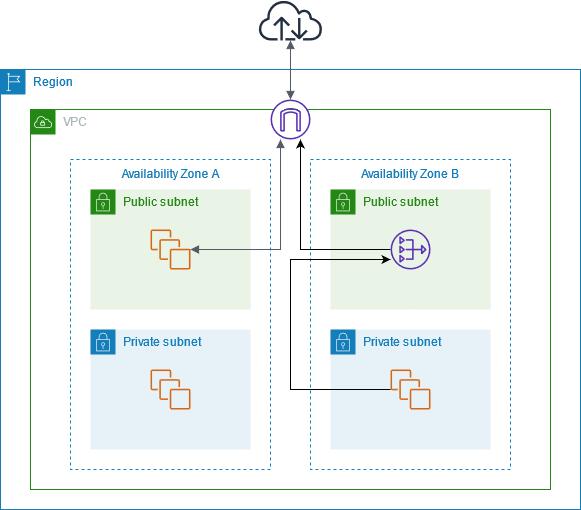
✅ 1. What is VPC?
Answer:
Amazon VPC (Virtual Private Cloud) is a private network inside AWS cloud.
It allows us to:
- isolate applications
- control networking
- secure resources
similar to a private data center.
Key Components of VPC
✅ Subnets
✅ Route Tables
✅ Internet Gateway
✅ NAT Gateway
✅ Security Groups
Real-Time Example
In microservices architecture:
- frontend services run in public subnet
- backend services run in private subnet
- databases remain private
This improves security.
Important Interview Point 🎯
VPC helps:
network isolation and security.
Example Architecture
Internet
↓
Public Subnet → Load Balancer
↓
Private Subnet → Spring Boot Microservices
↓
Private DB Subnet → RDS
Common Use Cases
✅ Secure application deployment
✅ Private databases
✅ Enterprise network isolation
✅ 2. What are Security Groups?
Answer:
Security Groups act like:
virtual firewalls
for AWS resources.
Used to:
- allow
- deny
- control
incoming and outgoing traffic.
Example
Allow:
Port 22 → SSH
Port 80 → HTTP
Port 443 → HTTPS
Port 8080 → Spring Boot App
Real-Time Example
Claims service EC2 instance:
- allow traffic only from Load Balancer
- deny direct internet access
This improves security.
Important Interview Point 🎯
Security Groups are:
stateful
Meaning:
if inbound traffic allowed,
response traffic automatically allowed.
Example Scenario
Mobile App
↓
Load Balancer
↓
Security Group
↓
EC2 Instance
Common Use Cases
✅ Restrict database access
✅ Protect microservices
✅ Allow only authorized traffic
✅ 3. What is Load Balancer?
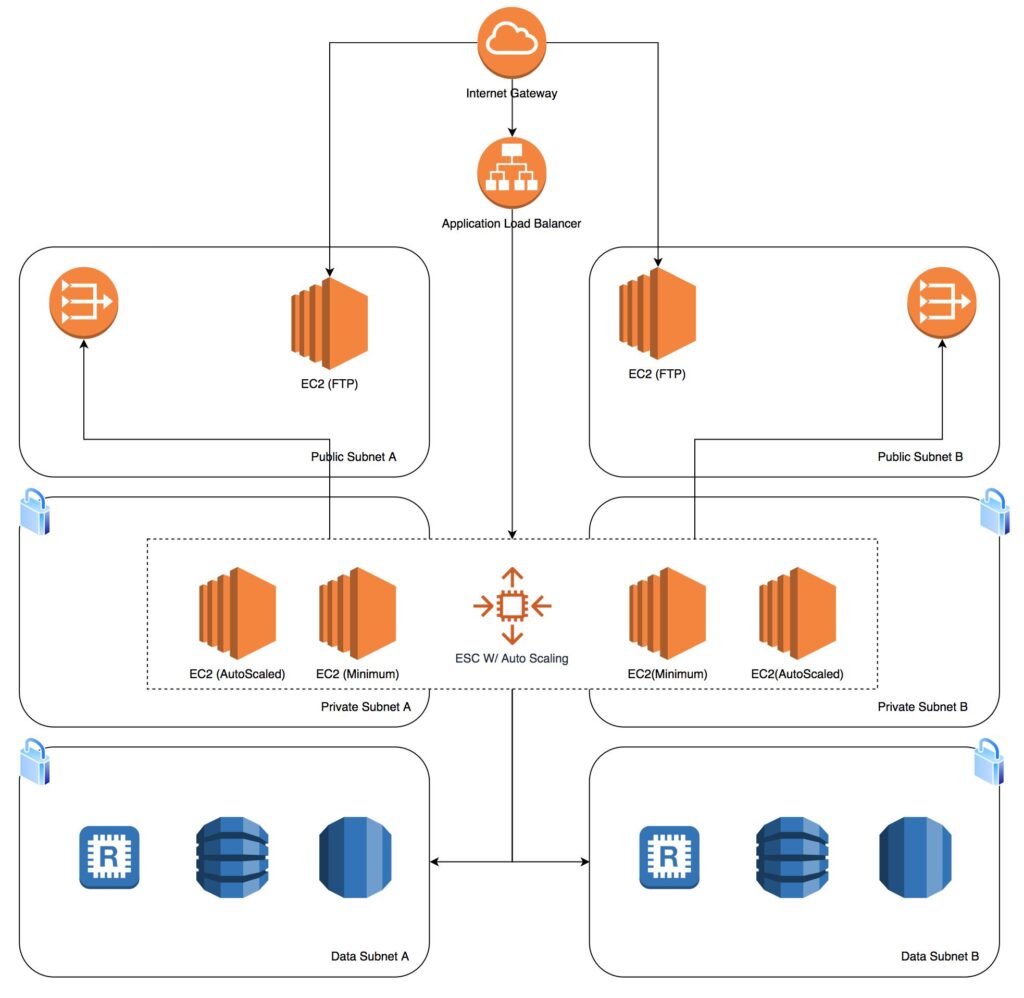
Answer:
Elastic Load Balancing (ELB) distributes traffic across multiple servers.
Used for:
- scalability
- high availability
- fault tolerance
Why Load Balancer Needed?
Without load balancer:
- one server gets overloaded
With load balancer:
- requests distributed evenly
Real-Time Example
Suppose:
3 EC2 instances running claims service.
Load balancer distributes requests across all instances.
Types of Load Balancers
1️⃣ Application Load Balancer (ALB)
Used for:
- HTTP/HTTPS traffic
- microservices routing
2️⃣ Network Load Balancer (NLB)
Used for:
- ultra-high performance
- TCP/UDP traffic
Example Flow
Client Request
↓
Load Balancer
↙ ↓ ↘
EC2-1 EC2-2 EC2-3
Important Interview Point 🎯
Load balancer improves:
✅ scalability
✅ fault tolerance
✅ zero downtime deployments
Real Production Example
High traffic:
- load balancer distributes requests
- unhealthy servers automatically removed
✅ 4. What is API Gateway?
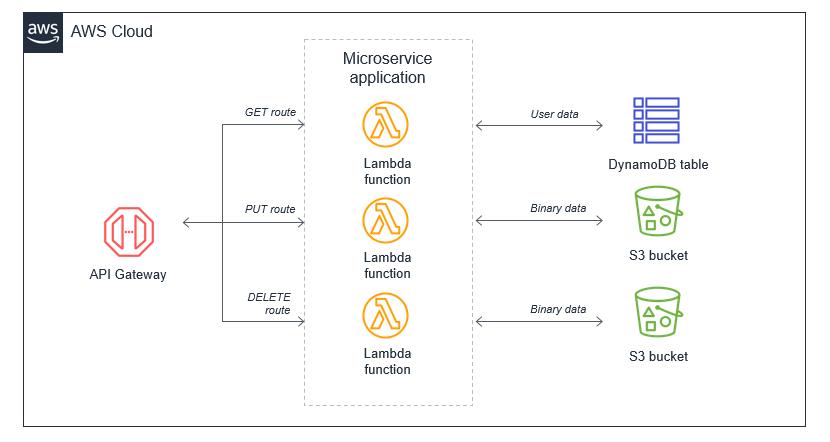
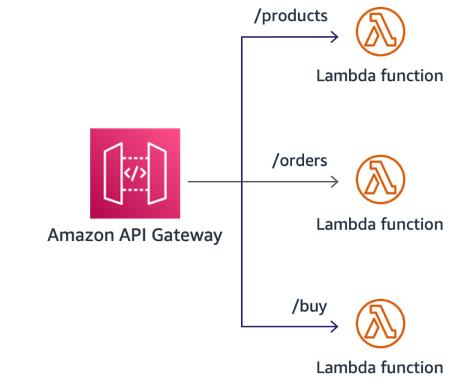
Answer:
Amazon API Gateway is used to expose and manage APIs.
Acts as:
single entry point
for backend microservices.
Responsibilities of API Gateway
✅ Request routing
✅ Authentication
✅ Rate limiting
✅ Monitoring
✅ Request transformation
Real-Time Example
Mobile App
↓
API Gateway
↓
Claims Service
Payment Service
Policy Service
Why API Gateway Important?
Without API Gateway:
- clients directly call multiple services
This creates:
❌ tight coupling
❌ security issues
❌ complex architecture
Benefits
✅ Centralized API management
✅ Better security
✅ Easier monitoring
✅ Scalability
Important Interview Point 🎯
API Gateway commonly used in:
microservices architecture
because:
it hides internal service complexity.
Real Production Features
API Gateway can provide:
- JWT validation
- request throttling
- logging
- caching
- routing
Load Balancer vs API Gateway
| Feature | Load Balancer | API Gateway |
| Main Purpose | Traffic distribution | API management |
| Layer | Network/Application | Application/API |
| Authentication | Limited | Advanced |
| Rate Limiting | No | Yes |
| Request Transformation | No | Yes |
| Microservices Routing | Basic | Advanced |
For deeper understanding and the latest updates, refer to the Official AWS Documentation.